
Constipation is one of the most common digestive problems affecting people of all ages. It can cause discomfort, bloating, abdominal pain, hard stools, and difficulty passing bowel movements. While occasional constipation is common, chronic constipation can interfere with daily life and may indicate underlying health issues.
Fortunately, natural remedies for constipation can help restore healthy bowel movements without relying on frequent laxative use. By making simple dietary and lifestyle changes, supporting gut health, and using traditional herbal remedies wisely, we can improve digestive function naturally and maintain long-term bowel regularity.
What Is Constipation?
Constipation generally refers to:
- Having fewer than three bowel movements per week
- Passing hard, dry, or lumpy stools
- Straining during bowel movements
- Feeling that the bowel has not emptied completely
- Experiencing bloating or abdominal discomfort
Occasional constipation usually resolves with lifestyle adjustments, but persistent symptoms require medical evaluation.
Common Causes of Constipation
Understanding the cause helps us choose suitable natural remedies for constipation and make practical changes to daily habits.
The most common causes include:
- Low-fiber diet
- Insufficient water intake
- Sedentary lifestyle
- Ignoring the urge to pass stool
- Pregnancy
- Aging
- Stress and anxiety
- Certain medications
- Hormonal disorders
- Digestive diseases
Many people experience constipation simply because they consume too many processed foods and too little fiber.
Increase Dietary Fiber Naturally
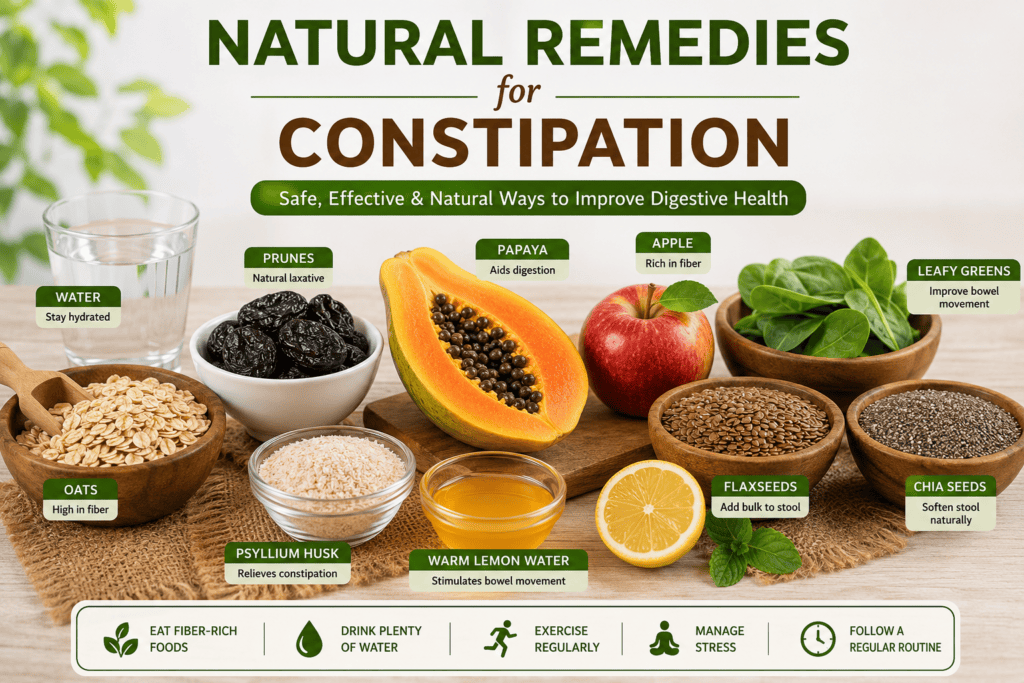
Natural remedies for constipation including papaya, prunes, oats, flaxseeds, chia seeds, psyllium husk, lemon water, and leafy greens
One of the most effective natural remedies for constipation is increasing dietary fiber.
Fiber adds bulk to stool and helps it move smoothly through the intestines. This makes fiber-rich foods an important part of natural remedies for constipation.
Best High-Fiber Foods
- Apples with skin
- Pears
- Guava
- Kiwi
- Papaya
- Oranges
- Oats
- Brown rice
- Whole wheat
- Barley
- Lentils
- Chickpeas
- Kidney beans
- Flaxseeds
- Chia seeds
- Pumpkin seeds
- Green leafy vegetables
- Broccoli
- Carrots
Adults should aim for approximately:
- Women: 25 grams daily
- Men: 38 grams daily
Increase fiber gradually while drinking adequate water to avoid bloating. For evidence-based guidance, read the NIDDK guide to constipation treatment.
Drink Enough Water Every Day
Water plays an essential role in preventing constipation and supports the benefits of natural remedies for constipation, particularly when dietary fiber is increased.
When the body is dehydrated, the colon absorbs more water from stool, making it hard and difficult to pass.
General hydration recommendations include:
- 2–3 liters of water daily
- More during hot weather
- More after exercise
Warm water in the morning may stimulate bowel movements in some individuals. The NHS constipation guidance also explains practical diet and lifestyle measures.
Start the Day with Warm Lemon Water
Warm lemon water is a popular home remedy.
Although scientific evidence remains limited, many people report improved digestion after drinking:
- One glass of warm water
- Fresh lemon juice
- Optional teaspoon of honey
This simple morning habit may stimulate digestive activity and improve hydration.
Eat Papaya for Better Digestion
Papaya is rich in:
- Fiber
- Water
- Vitamin C
- Digestive enzyme papain
Regular consumption may help soften stools and support healthy digestion.
Fresh ripe papaya makes an excellent breakfast or evening snack and can be included in a balanced approach to natural remedies for constipation.
Prunes: Nature’s Gentle Laxative
Prunes remain one of the most researched natural remedies for constipation.
They contain:
- Dietary fiber
- Sorbitol
- Phenolic compounds
Sorbitol naturally draws water into the intestines, helping soften stool.
Recommended intake:
- 5–10 prunes daily
- Or 150–200 ml prune juice
Flaxseeds for Healthy Bowel Function
Flaxseeds contain:
- Soluble fiber
- Insoluble fiber
- Healthy omega-3 fatty acids
Ground flaxseed works better than whole seeds.
Mix:
- One tablespoon ground flaxseed
- Yogurt
- Smoothies
- Oatmeal
Drink extra water when increasing flaxseed intake.
Chia Seeds Improve Stool Consistency
Chia seeds absorb large amounts of water.
After soaking, they form a gel that helps soften stools naturally.
Preparation:
- Soak one tablespoon overnight
- Add to smoothies
- Yogurt
- Oats
- Fruit bowls
Regular Physical Activity Stimulates Digestion
Exercise naturally stimulates intestinal movement. Regular movement is another useful part of natural remedies for constipation.
Excellent options include:
- Brisk walking
- Yoga
- Cycling
- Swimming
- Light jogging
Aim for at least:
30 minutes daily
Even a 15-minute walk after meals may improve bowel function.
Yoga Poses That Help Relieve Constipation
Several yoga poses promote healthy digestion. You may also find our guide to healthy daily habits for a better lifestyle useful.
Popular poses include:
- Wind-Relieving Pose (Pawanmuktasana)
- Child’s Pose
- Cobra Pose
- Cat-Cow Stretch
- Seated Spinal Twist
These exercises gently massage abdominal organs and encourage bowel movement.
Establish a Regular Toilet Routine
Healthy bowel habits matter and complement other natural remedies for constipation such as fiber, fluids, and physical activity.
Helpful practices include:
- Visit the bathroom at the same time every day.
- Never ignore the urge to pass stool.
- Avoid excessive straining.
- Sit comfortably with feet supported.
Many experts recommend trying after breakfast because the gastrocolic reflex is naturally strongest then.
Use a Footstool While Sitting on the Toilet
Changing body position can improve stool passage.
A small footstool raises the knees above hip level, creating a more natural squatting position.
Benefits include:
- Reduced straining
- Easier bowel movements
- Better rectal alignment
Probiotic Foods Support Gut Health
Healthy gut bacteria contribute to regular bowel movements.
Natural probiotic foods include:
- Yogurt
- Kefir
- Buttermilk
- Fermented vegetables
- Kimchi
- Sauerkraut
Combining probiotics with fiber often produces better digestive results.
Prebiotic Foods Feed Good Gut Bacteria
Prebiotics nourish beneficial intestinal bacteria.
Good sources include:
- Garlic
- Onion
- Bananas
- Oats
- Chicory root
- Asparagus
Together, probiotics and prebiotics improve digestive balance.
Healthy Fats Help Lubricate Digestion
Healthy fats stimulate bile production and improve intestinal function.
Include:
- Olive oil
- Avocado
- Nuts
- Seeds
- Fatty fish
Avoid excessive fried and processed foods.
Natural Ayurvedic Remedies for Constipation
Traditional Ayurveda recommends several herbs for maintaining bowel health. These traditional options are sometimes discussed alongside other natural remedies for constipation, but should be used with professional guidance.
Commonly used herbs include:
Triphala
Triphala combines:
- Amalaki
- Bibhitaki
- Haritaki
It has traditionally been used to promote regular bowel movements.
Isabgol (Psyllium Husk)
Psyllium is a natural soluble fiber that absorbs water and increases stool bulk.
Mix:
- One tablespoon psyllium
- One glass of water
Drink immediately followed by another glass of water.
Aloe Vera
Some people use aloe vera preparations for digestive support.
Only food-grade products should be used, and long-term use should be discussed with a healthcare professional.
Foods to Avoid During Constipation
Certain foods may worsen constipation.
Limit:
- Fast food
- Deep-fried foods
- Processed snacks
- White bread
- Excess cheese
- Sugary desserts
- Processed meat
- Alcohol
- Excess caffeine if dehydrated
Replacing processed foods with whole foods usually improves bowel health. Explore more practical advice in our article on science-backed ways to reduce stress.
Stress Management Improves Digestive Function
The digestive system is closely connected to mental health.
Stress may slow bowel movements.
Helpful relaxation methods include:
- Deep breathing
- Meditation
- Yoga
- Walking outdoors
- Adequate sleep
Managing stress naturally supports digestive regularity.
Natural Morning Routine for Constipation Relief
An effective daily routine may include:
- Wake up early.
- Drink one glass of warm water.
- Eat fresh fruit.
- Take a short walk.
- Practice deep breathing.
- Visit the toilet without rushing.
- Eat a fiber-rich breakfast.
Consistency often produces the best long-term results.
Sample High-Fiber Meal Plan
Breakfast
- Oatmeal with chia seeds
- Papaya
- Yogurt
Mid-Morning
- Apple
- Handful of almonds
Lunch
- Brown rice
- Lentils
- Mixed vegetables
- Salad
Evening Snack
- Guava
- Green tea
Dinner
- Whole wheat chapati
- Vegetable curry
- Soup
Before Bed
- Warm water
- Optional soaked prunes
When to Seek Medical Care
Natural remedies are effective for many people, but immediate medical evaluation is necessary if constipation is accompanied by:
- Blood in stool
- Severe abdominal pain
- Vomiting
- Sudden weight loss
- Persistent constipation lasting several weeks
- Pencil-thin stools
- Fever
- Severe rectal pain
These symptoms may indicate a more serious condition requiring professional treatment.
Frequently Asked Questions
What is the fastest natural remedy for constipation?
Drinking plenty of water, eating prunes, increasing dietary fiber, and taking a brisk walk are among the fastest natural methods for improving bowel movements.
Can bananas help constipation?
Ripe bananas contain fiber that may help constipation. However, unripe bananas can sometimes worsen constipation in certain individuals.
How much fiber should adults consume daily?
Women generally require about 25 grams of fiber daily, while men should aim for approximately 38 grams.
Is coffee good for constipation?
Coffee may stimulate bowel movements in some people. However, excessive coffee intake without adequate water can contribute to dehydration.
Can exercise relieve constipation?
Yes. Regular walking, yoga, cycling, and other physical activities stimulate intestinal movement and support regular bowel habits.
Final Thoughts
Constipation can often be managed successfully through natural lifestyle modifications, including a high-fiber diet, adequate hydration, regular exercise, healthy toilet habits, and gut-friendly foods. Natural remedies such as prunes, flaxseeds, chia seeds, psyllium husk, papaya, and Triphala may provide additional support for improving bowel regularity when used appropriately. Maintaining consistent daily habits not only relieves constipation but also promotes long-term digestive health and overall well-being.
Disclaimer
This article is intended for educational purposes only and should not be considered a substitute for professional medical advice, diagnosis, or treatment. If constipation is severe, persistent, or associated with alarming symptoms such as blood in the stool, unexplained weight loss, severe abdominal pain, or vomiting, consult a qualified healthcare professional promptly.
2 thoughts on “Natural Remedies for Constipation: 15 Proven Ways to Get Fast Relief Naturally”