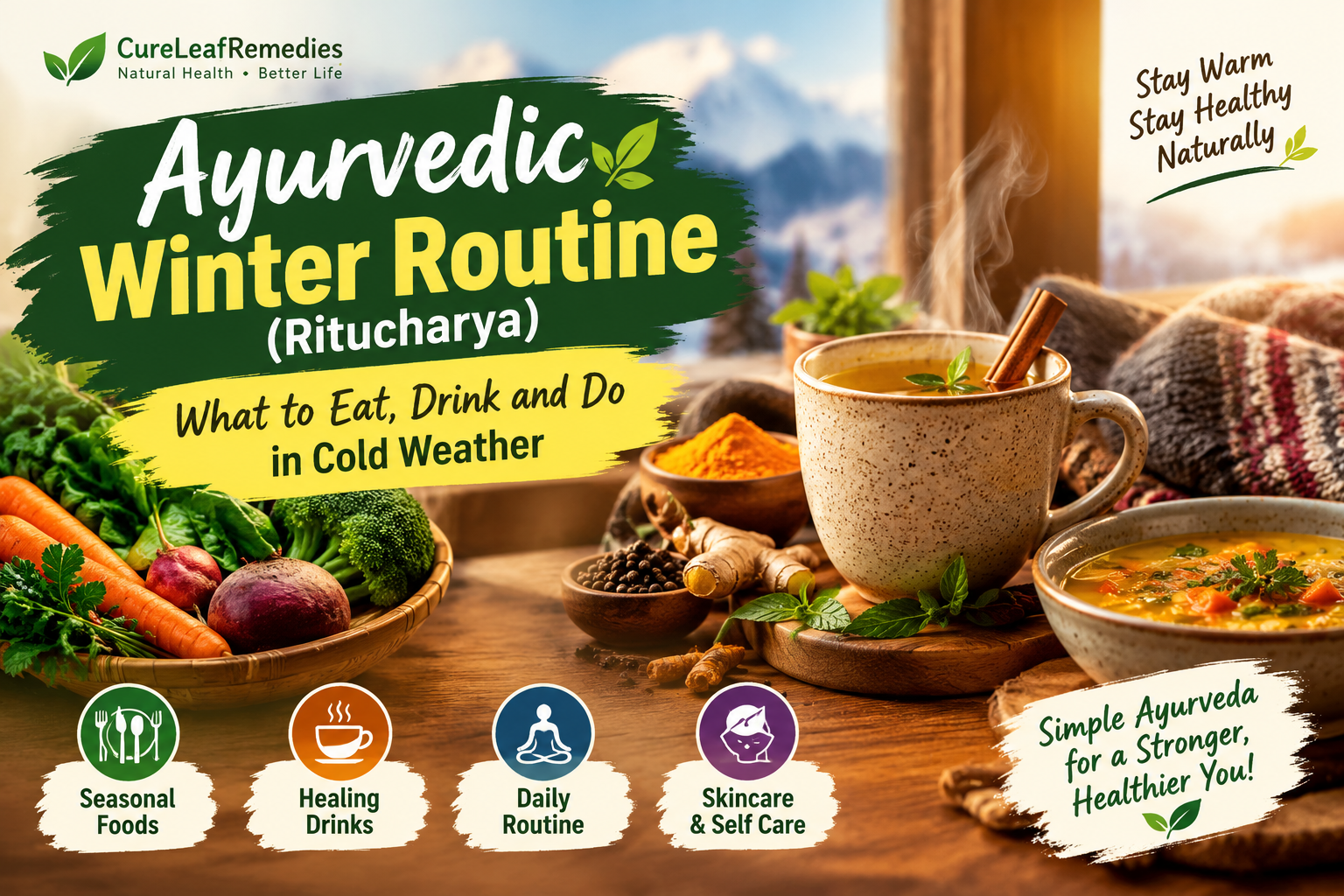
Ayurvedic Winter Routine (Ritucharya) means adapting your food and daily habits to cold weather. Winter can be a good time to slow down, eat nourishing seasonal foods and build a consistent daily routine. In Ayurveda, the seasonal approach to living is called Ritucharya: adjusting food and habits to the changing weather. This guide to an Ayurvedic winter routine (Ritucharya) shares practical ideas for meals, drinks, movement, sleep and self-care—without treating traditional concepts as a substitute for medical advice.
In this guide: what to eat in winter, what to drink, a simple daily routine, habits to avoid, and when to seek professional advice.
Ayurvedic Winter Routine: What Is Ritucharya?
An Ayurvedic winter routine applies Ritucharya, the Ayurvedic concept of adapting daily habits and diet to the seasons. Traditional Ayurvedic texts describe winter as a season when appetite and digestive capacity may feel stronger for some people. In practical terms, use the season as a reminder to eat regular balanced meals, stay comfortably warm, move your body and protect your sleep. Individual needs differ, so avoid rigid rules or extreme dietary restrictions.
For general healthy-eating principles, see the World Health Organization’s healthy diet guidance. Ayurveda is a traditional system with varied practices; the U.S. National Center for Complementary and Integrative Health explains what is known and what remains uncertain in its overview of Ayurvedic medicine.
1. Ayurvedic Winter Routine: What to Eat
For a balanced Ayurvedic winter routine, build meals around a variety of vegetables, fruit, whole grains, pulses, nuts or seeds, and a suitable protein source. Warm, cooked foods may feel especially comforting in cold weather, but you do not need to avoid salads or other foods that you tolerate well.
- Seasonal vegetables: include carrots, radish, leafy greens, pumpkin, cauliflower and other locally available vegetables.
- Whole grains: choose oats, millet, whole-wheat roti, brown rice or other grains that suit your needs.
- Pulses and protein: add dal, beans, chickpeas, curd, eggs, fish, tofu or another protein you eat.
- Fruit and nuts: enjoy whole fruit and modest portions of nuts or seeds as snacks.
- Spices for flavour: ginger, cumin, turmeric, cinnamon and black pepper can make meals warming and flavourful. Use amounts that suit your digestion and medical needs.

Simple winter meal ideas
- Breakfast: vegetable poha, oats, dal chilla or eggs with whole-grain toast.
- Lunch: roti or rice, dal, cooked vegetables and curd if tolerated.
- Evening snack: fruit, a small handful of nuts, or roasted chickpeas.
- Dinner: vegetable khichdi, dal with roti, or soup with a protein-rich side.
Keep portions aligned with your hunger, activity and health goals. If you have diabetes, kidney disease, food allergies or another condition requiring a specific diet, follow advice from your clinician or registered dietitian.
2. Ayurvedic Winter Routine: What to Drink
Hydration is an important part of an Ayurvedic winter routine. Cold weather can make thirst less noticeable, but hydration still matters. Drink water regularly through the day; room-temperature or warm water is fine if you find it more comfortable. Unsweetened herbal infusions or ordinary tea can add variety, but they do not replace water or medical treatment.
- Keep a bottle or cup of water nearby and drink with meals.
- Try warm water or a mild ginger infusion if you enjoy the taste.
- Limit sugary drinks and avoid relying on sweetened “detox” drinks.
- Be cautious with concentrated herbal products and supplements, especially if pregnant, breastfeeding, taking medicines or living with a chronic condition.
3. Choose Warm, Balanced Meals
For an easy Ayurvedic winter routine, soups, dal, vegetable stews and khichdi are convenient winter options because they can combine vegetables, grains and protein in one meal. Add beans, lentils, tofu, eggs or another protein source to make a light soup more satisfying. There is no single “best” winter food: variety and overall dietary quality matter more than one ingredient.

4. Ayurvedic Winter Routine: A Simple Daily Plan
Morning
- Wake at a consistent time and give yourself a few minutes to adjust to the cold.
- Drink water, then have breakfast when you are ready.
- Try gentle stretching, yoga or a brisk walk in daylight, dressing appropriately for the weather.
Daytime
- Eat regular meals and include vegetables, fibre-rich foods and protein.
- Take short movement breaks if you work at a desk for long periods.
- Get daylight when possible and keep indoor spaces comfortably ventilated.
Evening
- Choose a dinner that is satisfying without leaving you uncomfortably full.
- Reduce bright screens and stimulating activities before bed.
- Aim for a consistent sleep schedule and enough sleep for your age and needs.
For more everyday habits, read our guide to 5 Healthy Daily Habits for a Better Lifestyle. Gentle movement and relaxation can also complement a balanced routine; explore our article on science-backed ways to reduce stress naturally.
5. Ayurvedic Winter Routine: Skin Care and Comfort
Skin care is another practical part of an Ayurvedic winter routine. Cold air and indoor heating may leave skin feeling dry. Use a gentle cleanser, apply a fragrance-free moisturiser after bathing, and avoid very hot showers if they worsen dryness. Traditional oil massage (abhyanga) is practised by some people as self-care, but it is optional—not essential for health. Choose products that do not irritate your skin, avoid slipping hazards, and do not apply oils to broken or infected skin without professional advice.
6. Winter Habits to Limit
- Skipping meals or extreme fasting: these are not necessary for seasonal wellness and may be unsuitable for some people.
- Too many sweets and fried snacks: enjoy treats in moderation while keeping meals varied.
- Staying inactive all day: add movement that matches your ability and the weather.
- Unverified remedies: do not assume that “natural” means safe. Some Ayurvedic products can interact with medicines or contain harmful contaminants.
- Ignoring symptoms: persistent cough, breathing difficulty, fever, chest pain, unusual fatigue or worsening chronic symptoms deserve appropriate medical attention.
If you are working on long-term metabolic health, you may also find our article on science-backed habits that help reduce type 2 diabetes risk useful.
7. Ayurvedic Winter Routine: Practical Daily Checklist
- Eat regular, balanced meals with seasonal produce.
- Drink water throughout the day, choosing warm drinks if preferred.
- Include gentle movement or exercise most days, as appropriate for your health.
- Keep a consistent sleep and wake time.
- Protect your skin from dryness and dress for the weather.
- Check with a qualified healthcare professional before using concentrated herbs or supplements.
Frequently Asked Questions
What is the best breakfast for an Ayurvedic winter routine?
There is no one best breakfast for everyone. Options such as oats, vegetable poha, dal chilla or eggs with whole grains can provide a balanced start to the day.
Should I drink only warm water in winter?
No. Warm or room-temperature water is a personal preference. The main goal is to drink enough fluids for your needs.
Can I use ginger, turmeric or other spices every day?
Normal culinary amounts are suitable for many people, but concentrated supplements may cause side effects or interact with medicines. Ask a healthcare professional if you are unsure.
Does Ritucharya prevent illness?
Ritucharya is a traditional seasonal wellness framework, not a guarantee against illness. Balanced nutrition, physical activity, sleep, vaccination where recommended and appropriate medical care remain important.
Final Takeaway
A sustainable Ayurvedic winter routine (Ritucharya) does not need to be complicated. Keep your Ayurvedic winter routine simple and consistent by focusing on balanced meals, hydration, movement and sleep. Prioritise varied seasonal foods, adequate hydration, regular movement, restorative sleep and sensible self-care. Treat traditional practices as optional additions, and seek evidence-based medical guidance for symptoms or health conditions.
Health disclaimer: This article is for general education and is not a substitute for individual diagnosis or treatment. Consult a qualified healthcare professional for personalised advice, especially before starting herbs, supplements or restrictive diets.
1 thought on “Ayurvedic Winter Routine (Ritucharya): What to Eat, Drink and Do in Cold Weather”