
After a busy day, your body may feel tired while your mind keeps replaying conversations, deadlines, and tomorrow’s to-do list. A gentle 10-minute yoga for better sleep routine can give you a quiet transition from activity to rest. It combines comfortable stretches, slow breathing, and a few moments of stillness.
Yoga is not a guaranteed treatment for insomnia, and a short routine will not work the same way for everyone. However, research suggests that regular yoga may improve sleep quality in some people. This guide offers a beginner-friendly sequence you can try at home without special equipment. A 10-minute yoga for better sleep routine can be a realistic starting point if longer classes feel overwhelming.
Table of Contents
- What Can Yoga Do for Sleep?
- Your 10-Minute Bedtime Yoga Routine
- How to Make Bedtime Yoga a Habit
- Safety and Modifications
- Small Bedtime Changes
- Frequently Asked Questions
- The Takeaway
What Can Yoga Do for Sleep?
Yoga combines movement, breathing, and attention to the present moment. A slow evening practice may help you release physical tension and reduce the feeling of being mentally switched on. The aim is not to tire yourself out; it is to make the last part of your day calmer. For some people, 10-minute yoga for better sleep can become a gentle cue that the day is ending.
The National Center for Complementary and Integrative Health (NCCIH) notes that some studies have found improvements in sleep quality among groups practising yoga, including older adults and women with sleep difficulties. The evidence does not establish yoga as a treatment for insomnia. You can read the NCCIH evidence review on sleep and complementary approaches for more detail.
Think of the 10-minute yoga for better sleep sequence as one supportive bedtime habit, alongside a consistent sleep schedule and a comfortable sleep environment.
Your 10-Minute Yoga for Better Sleep Routine
This 10-minute yoga for better sleep sequence can be done on a yoga mat, carpet, or firm bed if getting down to the floor is difficult. Move slowly, keep your breathing natural, and never force a stretch. The timings below add up to ten minutes; shorten or skip any movement that feels uncomfortable.
1. Child’s Pose (Balasana) — 2 minutes
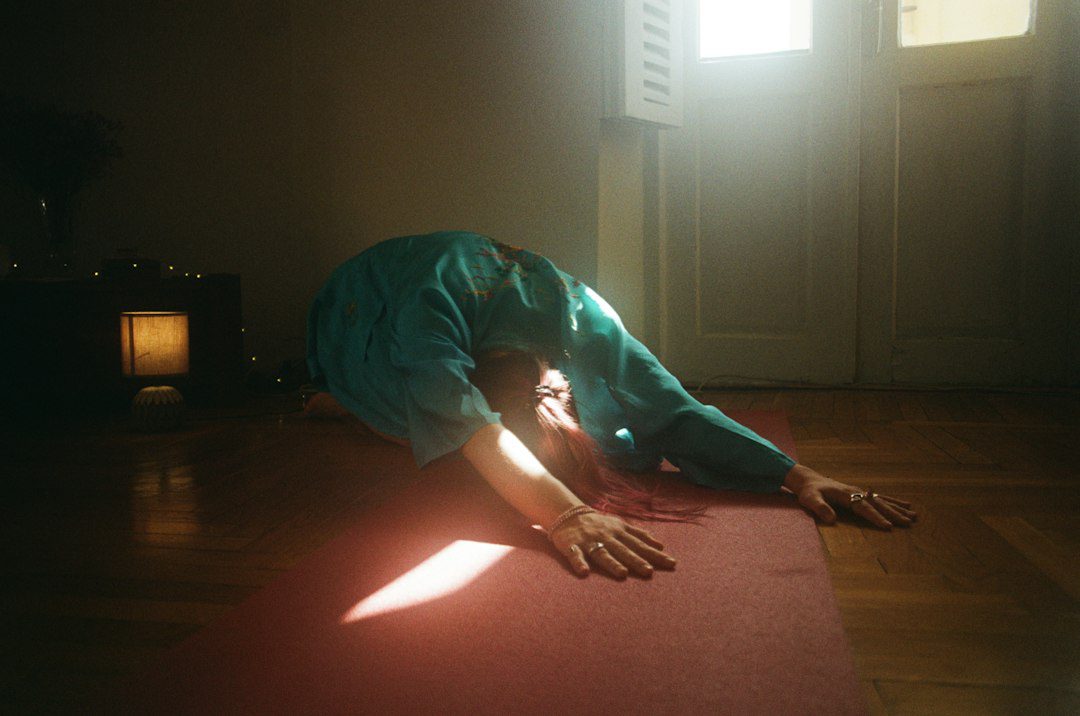
Kneel with your knees comfortably apart and bring your big toes towards each other. Slowly fold your torso forward and rest your forehead on a cushion or folded blanket. Let your arms rest beside your body or stretch them forward, whichever feels easier.
During 10-minute yoga for better sleep, use Child’s Pose only if your knees, hips, and ankles feel comfortable. Breathe gently into your ribs and back. If you feel strain, place a pillow under your chest or choose a comfortable seated position instead. Child’s Pose should feel restful, not painful.
2. Cat–Cow Stretch (Marjaryasana–Bitilasana) — 1 minute
Come onto your hands and knees, with wrists under shoulders and knees under hips. As you breathe in, gently lift your chest and tailbone without forcing your lower back. As you breathe out, round your spine comfortably and let your head relax.
Repeat slowly for several breaths. Keep the movement small and smooth. If kneeling bothers your wrists or knees, skip this pose and sit comfortably while gently rolling your shoulders.
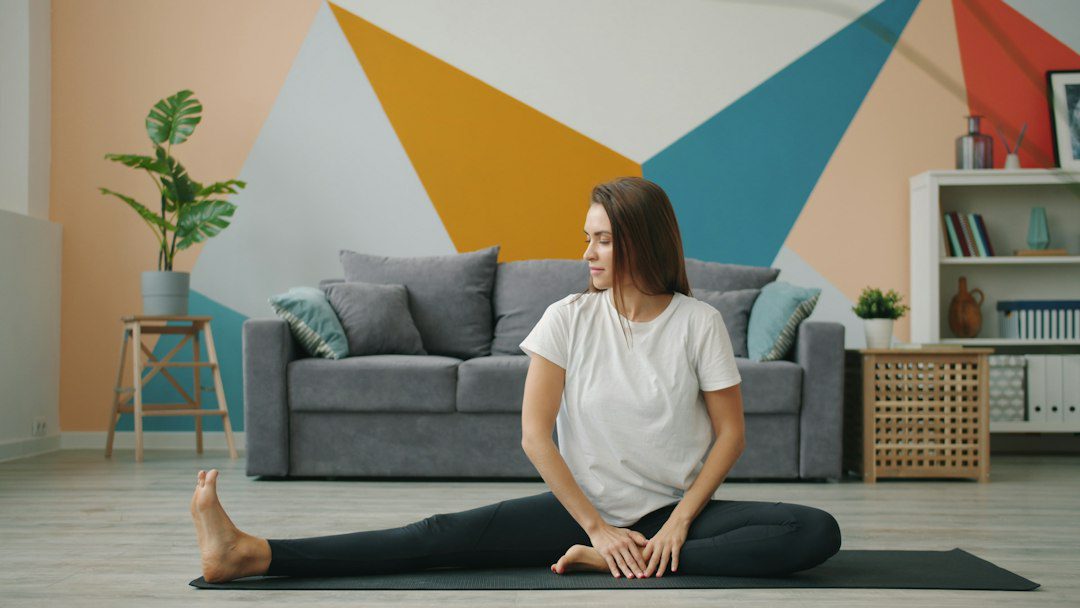
3. Seated Forward Fold (Paschimottanasana variation) — 2 minutes
Sit with your legs extended, knees slightly bent if needed. Inhale to lengthen your spine; then hinge forward only as far as comfortable. Rest your hands on your thighs, shins, or a cushion rather than pulling yourself down.
Keep the neck relaxed and avoid bouncing. Anyone with back pain, sciatica, or a recent spinal injury should skip this stretch unless a qualified clinician or yoga instructor has advised a suitable modification.
4. Legs Up the Wall (Viparita Karani variation) — 2 minutes
Sit sideways next to a wall, then gently turn onto your back and rest your legs up the wall. Move your hips away from the wall if a close position feels uncomfortable. Place a folded blanket under your head and let your arms rest by your sides.
This is an optional resting position, not a required inversion. Come out slowly by bending your knees, rolling onto your side, and pausing before sitting up. Skip it if it causes pressure, dizziness, discomfort, or if you have been advised to avoid this position.
5. Gentle Supine Twist — 1 minute
Lie on your back with knees bent and feet on the floor. Let both knees move a small distance to one side while keeping your shoulders relaxed. Return to the centre and repeat on the other side. A cushion between or beneath the knees can make this more comfortable.
Keep the range of movement easy during 10-minute yoga for better sleep. Do not press your knees down or twist through pain. If twisting aggravates your back, remain on your back with knees bent instead.

6. Slow Belly Breathing and Rest — 2 minutes
Lie comfortably or sit with your back supported. Place one hand over your abdomen and notice it rise gently as you breathe in and fall as you breathe out. Let the exhalation become slightly longer only if that feels natural; do not hold your breath or try to take unusually deep breaths.
If focusing on breathing makes you anxious or light-headed, return to normal breathing and notice the support beneath your body. This final quiet pause completes the 10-minute yoga for better sleep routine. Keep the whole practice easy enough that you finish feeling settled rather than strained.
How to Make Bedtime Yoga a Consistent Habit
Choose a time that fits your evening, ideally as part of a predictable wind-down period. A regular 10-minute yoga for better sleep practice may be easier to maintain when you attach it to an existing habit, such as brushing your teeth. Dim the lights, silence notifications, and keep the routine gentle. If movement makes you feel more alert, practise earlier in the evening rather than immediately before bed.
- Keep it simple: use the same sequence for a week before changing poses.
- Use comfortable support: cushions, folded blankets, and a wall can make movements easier.
- Do not chase flexibility: the goal is comfort and relaxation, not a deeper stretch.
- Pair it with sleep habits: keep a regular bedtime and wake time, reduce bright screens, and avoid caffeine late in the day.
For a broader movement routine, see our guide to a beginner-friendly morning yoga routine. You may also find our article on science-backed ways to reduce stress naturally useful if racing thoughts are part of your bedtime difficulty.
Safety: When to Modify or Skip a Pose
Gentle yoga is generally safe for many healthy adults, but strains and sprains can happen. Keep your 10-minute yoga for better sleep practice gentle and stop if you feel sharp pain, numbness, tingling, chest discomfort, unusual breathlessness, or dizziness. Avoid forceful stretches, headstands, shoulder stands, and intense breathing exercises as part of a bedtime routine.
If you are pregnant, have glaucoma, uncontrolled high blood pressure, balance problems, osteoporosis, a recent operation, or a neck, back, hip, or knee condition, ask your healthcare professional or a qualified yoga instructor which movements are appropriate. The NCCIH also advises people with health conditions and older adults to discuss individual modifications before practising.
Yoga should not replace assessment or treatment for ongoing sleep problems. If difficulty sleeping continues, affects daytime functioning, or is accompanied by loud snoring, gasping, restless legs, or significant mood changes, speak with a healthcare professional. For chronic insomnia, CBT-I is a recommended first-line treatment. The NHLBI guide to insomnia treatment and healthy sleep habits explains evidence-based options.
Small Bedtime Changes That Support Better Sleep
A calming yoga sequence works best as part of a wider routine. Try to keep your bedroom quiet, dark, and comfortably cool. Avoid large late-night meals, nicotine, and alcohol close to bedtime. If you drink tea or coffee, consider moving your last caffeinated drink earlier in the day.
Keep your sleep and wake times reasonably consistent, including weekends. If you work shifts, aim for a repeatable sleep window and reduce light and noise in your room when you need to rest during daylight hours. These practical habits often matter more than adding extra poses.
For more everyday wellness ideas, explore our guide to five healthy daily habits for a better lifestyle.
Frequently Asked Questions
Can 10 minutes of yoga really help me sleep?
A regular 10-minute yoga for better sleep practice may help you unwind and support sleep quality, particularly when practised regularly. Research does not show that ten minutes of yoga cures insomnia, and individual responses vary.
What is the best yoga pose before bed?
There is no single best pose for everyone. Child’s Pose, supported legs-up-the-wall, and gentle seated stretches are options if they feel comfortable for your body.
Should I do yoga immediately before sleeping?
Gentle, restorative movements may suit the bedtime period. Avoid vigorous flows or intense stretches if they make you feel energised; try them earlier instead.
Is bedtime yoga suitable for beginners?
A gentle 10-minute yoga for better sleep routine can be adapted for many beginners with simple, supported movements and a small range of motion. Use cushions, avoid painful positions, and seek individual guidance if you have a health condition or injury.
Can yoga replace treatment for insomnia?
No. Yoga can be a complementary relaxation habit, but persistent insomnia needs proper assessment. CBT-I is a recommended treatment for chronic insomnia in adults.
How often should I practise this routine?
You may try it on several evenings each week and adjust based on comfort and how you feel. Consistency is more useful than forcing yourself to complete every pose.
The Takeaway
A gentle 10-minute yoga for better sleep routine can be a practical way to slow down after a demanding day. Start with supported poses, breathe comfortably, and leave out any movement that causes pain or strain. Combine the practice with regular sleep times and a relaxing bedroom environment.
Remember that yoga may support sleep quality, but it is not a substitute for medical care when sleep problems persist. Begin gently, notice what feels helpful, and build a bedtime routine you can realistically maintain.
Medical disclaimer: This article is for general education and is not a substitute for personalised medical advice, diagnosis, or treatment.
2 thoughts on “10-Minute Yoga for Better Sleep: 5 Best Calming Poses”