Vitamin D is often called the “sunshine vitamin” because our bodies naturally produce it when exposed to sunlight. Despite its importance, millions of people worldwide suffer from vitamin D deficiency without realizing it. Low vitamin D levels can affect everything from bone health and immunity to mood and energy levels.
If you constantly feel tired, experience muscle pain, or frequently catch colds, your body may be signaling that you have insufficient vitamin D. Understanding the signs of vitamin D deficiency can help you take timely action and protect your long-term health.
In this article, we will discuss the symptoms, causes, risk factors, complications, and natural ways to improve vitamin D levels.
What Is Vitamin D?
Vitamin D is a fat-soluble vitamin that helps the body absorb calcium and phosphorus, which are essential for strong bones and teeth. It also plays an important role in supporting the immune system, muscle function, and mental health.According to the National Institutes of Health (NIH), vitamin D helps regulate calcium absorption and supports bone health.
There are two main forms of vitamin D:
- Vitamin D2 (Ergocalciferol) – Found in plant-based foods.
- Vitamin D3 (Cholecalciferol) – Produced by sunlight exposure and found in animal foods.
Maintaining healthy vitamin D levels is essential for overall wellness.
Why Is Vitamin D Important?
Vitamin D contributes to several vital functions, including:
- Maintaining strong bones and teeth.
- Supporting immune health.
- Improving muscle strength.
- Reducing inflammation.
- Supporting brain function and mood.
- Helping regulate calcium absorption.
- Promoting heart health.
Without enough vitamin D, many body systems can become affected.
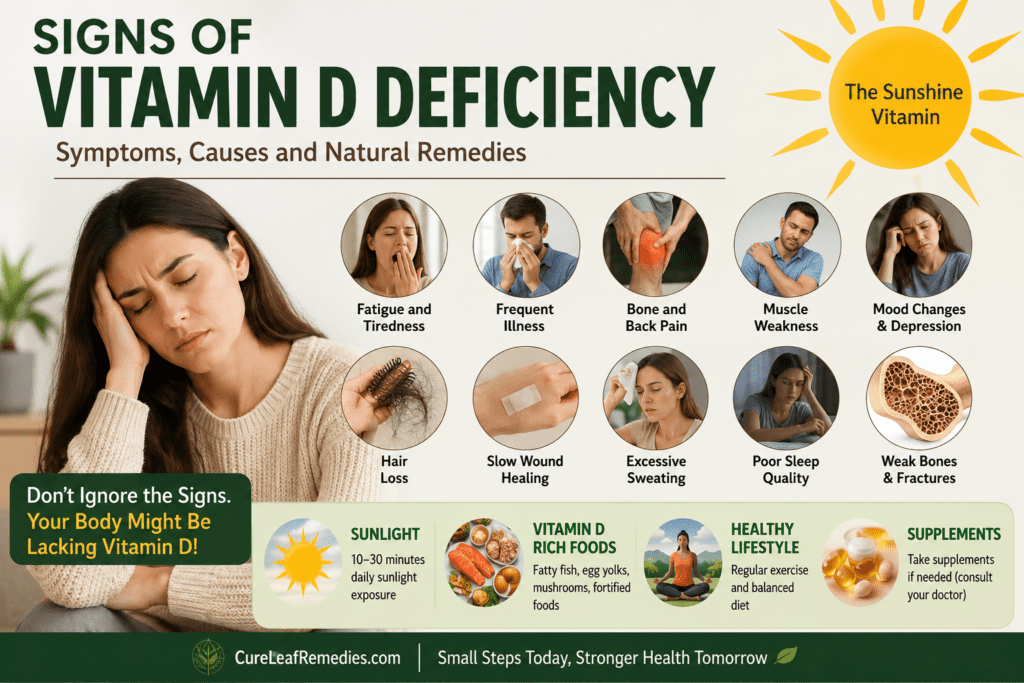
Common Signs of Vitamin D Deficiency
Recognizing signs of Vitamin D Deficiency and symptoms early can prevent long-term complications.The Mayo Clinic explains that fatigue, muscle weakness, and bone pain are among the common symptoms associated with vitamin D deficiency.
1. Persistent Fatigue and Low Energy
One of the earliest and most common symptoms is chronic tiredness. Even after adequate sleep, people with vitamin D deficiency often feel exhausted and lack motivation.
Low vitamin D levels can interfere with cellular energy production, leaving you feeling sluggish throughout the day.
2. Frequent Illness and Weak Immunity
Vitamin D plays a major role in strengthening the immune system. If you frequently experience:
- Colds
- Flu
- Respiratory infections
- Seasonal illnesses
Your body may not have enough vitamin D to fight infections effectively.
3. Bone Pain and Back Pain
Vitamin D helps the body absorb calcium. Deficiency may cause:
- Lower back pain
- Bone tenderness
- Aching joints
- Chronic discomfort
Persistent pain without a clear cause should not be ignored.
4. Muscle Weakness
Many individuals with low vitamin D experience:
- Muscle cramps
- Weakness
- Difficulty climbing stairs
- Reduced physical performance
Muscles require adequate vitamin D for proper functioning.
5. Depression and Mood Changes
Research suggests a connection between vitamin D deficiency and mood disorders. Symptoms may include:
- Sadness
- Anxiety
- Irritability
- Loss of interest
- Seasonal depression
Vitamin D receptors are present in areas of the brain responsible for emotional regulation.
6. Hair Loss
Excessive hair shedding can sometimes indicate low vitamin D levels. Severe deficiency has been linked with conditions like alopecia areata, an autoimmune disease causing hair loss.
7. Slow Wound Healing
Cuts, injuries, and surgical wounds may take longer to heal when vitamin D levels are low because this vitamin supports inflammation control and tissue repair.
8. Excessive Sweating
Unusual sweating, especially around the forehead, has historically been associated with vitamin D deficiency.
9. Bone Fractures and Osteoporosis
Repeated fractures and weakened bones are major warning signs. Vitamin D deficiency can increase the risk of:
- Osteoporosis
- Bone thinning
- Falls
- Fragility fractures
10. Poor Sleep Quality
People with low vitamin D often report:
- Difficulty sleeping
- Insomnia
- Frequent waking
- Daytime sleepiness
Healthy vitamin D levels may contribute to better sleep patterns.
Causes of Vitamin D Deficiency
Several factors can contribute to inadequate vitamin D levels.
Limited Sun Exposure
Modern lifestyles often keep people indoors. Sunscreen, pollution, and clothing coverage can further reduce vitamin D production.
Poor Diet
Vitamin D-rich foods are limited. Inadequate intake may result in deficiency.
Aging
Older adults produce less vitamin D from sunlight and are more susceptible to deficiency.
Obesity
Vitamin D becomes stored in body fat, making less available for circulation.
Digestive Disorders
Conditions like:
- Crohn’s disease
- Celiac disease
- Ulcerative colitis
can interfere with vitamin D absorption.
Kidney and Liver Disease
These organs help convert vitamin D into its active form. Impaired function may lead to deficiency.
Who Is at Higher Risk?
Certain individuals have a greater risk of vitamin D deficiency:
- Elderly adults.
- People with darker skin.
- Individuals who stay indoors most of the time.
- Vegetarians and vegans.
- Pregnant and breastfeeding women.
- Obese individuals.
- People with digestive disorders.
- Those living in regions with limited sunlight.
Complications of Vitamin D Deficiency
Ignoring low vitamin D levels can lead to serious health problems, including:
Osteoporosis
Bones become brittle and fragile, increasing fracture risk.
Rickets in Children
Severe deficiency in children can lead to soft and weak bones.
Weak Immune System
Low vitamin D may increase susceptibility to infections.
Cardiovascular Problems
Studies suggest vitamin D deficiency may be associated with high blood pressure and heart disease.
Mood Disorders
Depression and anxiety may worsen when vitamin D levels remain low.
How Is Vitamin D Deficiency Diagnosed?
Doctors usually diagnose deficiency through a blood test called:
25-hydroxy vitamin D test
General interpretation:
- Below 20 ng/mL – Deficient
- 20–30 ng/mL – Insufficient
- Above 30 ng/mL – Adequate
Consult a healthcare professional for proper evaluation.
Best Natural Sources of Vitamin D
Sunlight
Natural sunlight is one of the best sources.
Try to spend:
- 10–30 minutes outdoors
- Morning sunlight is preferable
- Expose arms and legs when possible
Fatty Fish
Excellent sources include:
- Salmon
- Sardines
- Tuna
- Mackerel
Egg Yolks
Egg yolks contain moderate amounts of vitamin D.
Mushrooms
Sun-exposed mushrooms provide vitamin D2 and are suitable for vegetarians.
Fortified Foods
Many products are fortified with vitamin D, including:
- Milk
- Yogurt
- Orange juice
- Breakfast cereals
Natural Ways to Improve Vitamin D Levels
Spend More Time Outdoors
Regular sunlight exposure supports natural vitamin D synthesis.Maintaining a healthy lifestyle through balanced nutrition and physical activity is essential. Explore more wellness tips on CureLeafRemedies.com.
Eat a Balanced Diet
Include:
- Fatty fish
- Eggs
- Dairy products
- Mushrooms
- Fortified foods
Maintain a Healthy Weight
Weight management helps improve vitamin D availability.
Exercise Regularly
Physical activity supports bone health and overall wellness.
Take Supplements When Needed
Supplements should be taken under medical supervision, especially high doses.
Can Vitamin D Deficiency Be Prevented?
Yes. Prevention involves:
- Safe sun exposure.
- Eating nutrient-rich foods.
- Regular physical activity.
- Maintaining healthy body weight.
- Periodic blood tests in high-risk individuals.
- Taking supplements if prescribed.
When Should You See a Doctor?
Seek medical advice if you experience:
- Persistent fatigue.
- Bone pain.
- Frequent infections.
- Depression.
- Muscle weakness.
- Repeated fractures.
Early diagnosis and treatment can prevent complications.
Conclusion
Vitamin D deficiency is more common than many people realize, and its symptoms often develop gradually. Persistent fatigue, muscle weakness, bone pain, mood changes, and frequent illnesses are among the most common warning signs. Fortunately, maintaining healthy vitamin D levels is possible through balanced nutrition, regular sunlight exposure, exercise, and medical guidance when necessary.
Pay attention to your body’s signals and seek professional advice if symptoms persist. Early intervention can help protect your bones, strengthen your immune system, and improve your overall quality of life. A healthy vitamin D level is not just important for your bones—it is essential for your entire body and long-term well-being.